- HOME
- Investor Relations
- To Our Investors
- Toray’s Strengths
Toray’s Strengths
Strengh 1Winning formula for Toray = Toray’s Value Creation Model
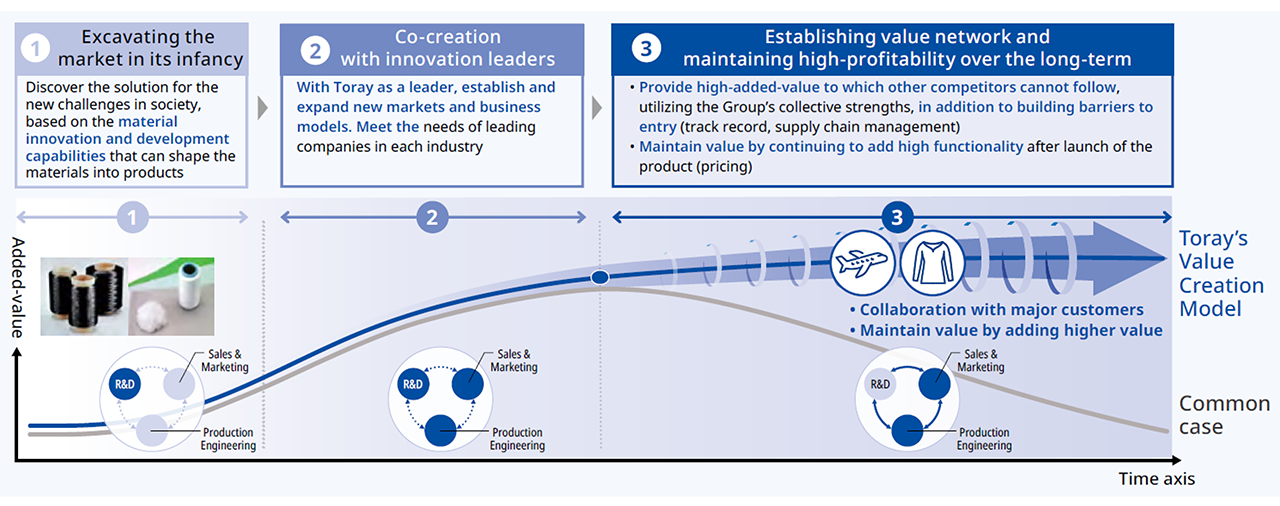
Toray’s value creation model begins with an approach of excavating or developing new markets, either as the industry leader or alongside other leading companies, through the early development of cutting-edge materials.
After pioneering those markets, the Company uses its strengths in R&D, sales and marketing, and production engineering as value creation engines to build a global value chain with high barriers to entry. This generates high-added-value and switching costs that competitors cannot easily follow. Even when the market matures, the Company continues to enhance added-value over the long-term to maintain value and, by extension, pricing. Examples of the achievement by the value creation model include joint development of high-performance fibers with client companies and the long-term adoption of carbon fiber composites for aircraft.
Strength 2Research and Technological Development
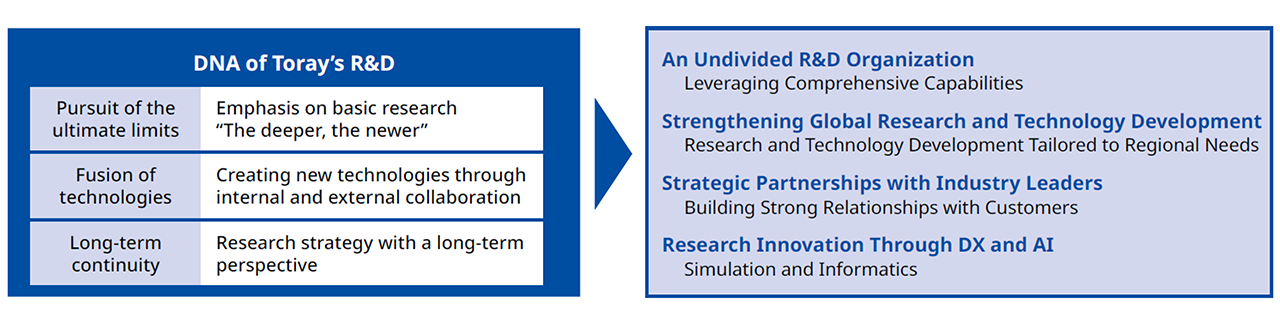
1. Strength: "The Pursuit of Ultimate Limits," "Fusion of Technologies," and "Long-Term Continuity"
Since the Company’s founding, Toray’s Technology Center has served as the control tower for driving research and technological development into advanced materials based on the conviction that R&D provides the key to building the Toray’s tomorrow.
Toray’s R&D teams have inherited the idea of “The Deeper, the Newer,” a concept that digging deeper into something will result in new discoveries and inventions. This is our DNA of “pursuing the ultimate limits.” On top of that, our strength lies in our commitment to long-term continuity, based on which we will continue to undertake initiatives from a long-term perspective. Based on a grand vision of the times and the needs of society, Toray aims to drive innovation that delivers social and economic value.
A notable feature of R&D at Toray is that all research and technological development functions are centralized in the Technology Center. This integrated R&D organization means new technologies arising from the fusion of technologies are more likely to emerge, and advanced materials originally developed for other businesses to be rapidly deployed across multiple businesses. This also enables the Group to fully utilize its combined strength by actively exploiting techniques and knowledge from many fields to solve problems in a single business field.
2. Four Core Technologies
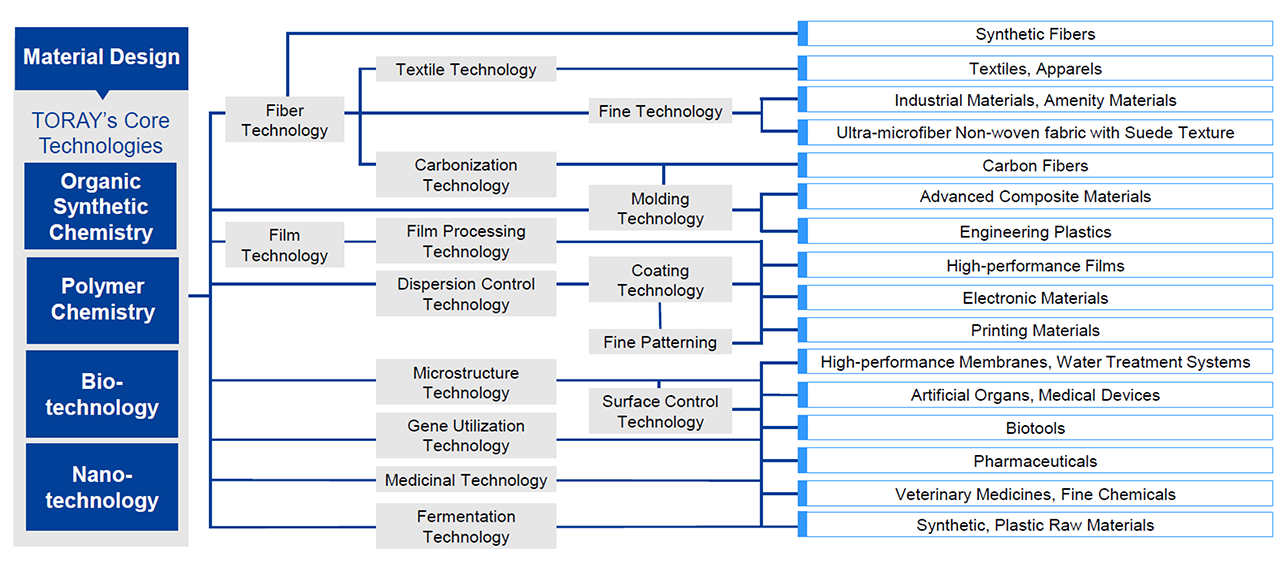
At first glance, it could appear that Toray Group business portfolio is diversified across a wide range of segments. However, all of these segments are built on our four core technologies. In addition to the organic synthetic chemistry, biotechnology, and polymer chemistry technologies the Company has focused its efforts on since its founding, Toray Group has added nanotechnology, the pursuit to the ultimate limits, as a fourth core technology. Using these four technologies, Toray Group is promoting greater depth and fusion of fundamental technologies such as polymerization, spinning, fibers application processing, film processing, and organic synthesis. The Group is also creating advanced materials and developing businesses in the fields of textiles, films, resins, chemicals, electronic & information materials, carbon fiber composite materials, pharmaceuticals, medical devices, and water treatment. All of these products have the four core technologies in common, which contributes to the likely emergence of technological synergies, and Toray Group is able to produce materials with even higher added value thanks to its various businesses combining the innovative technologies and advanced materials derived from these four core technologies.
- Column
-
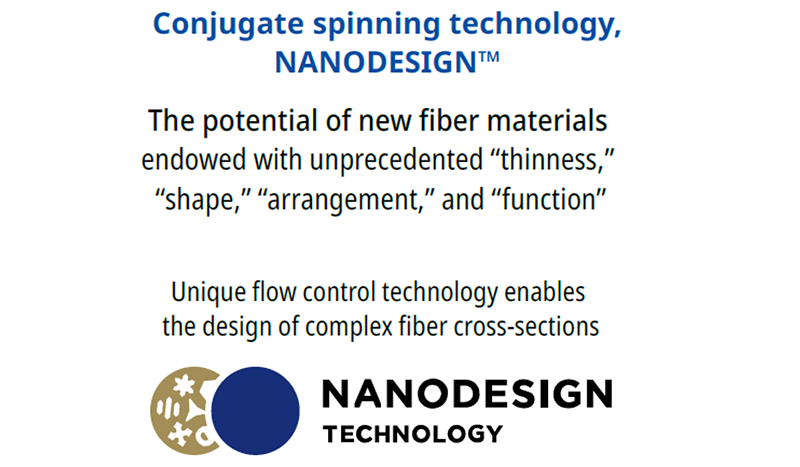
Ultra-Precise Conjugate Spinning Technology That Contributes to High-Performance Comfortable Fibers & Textiles
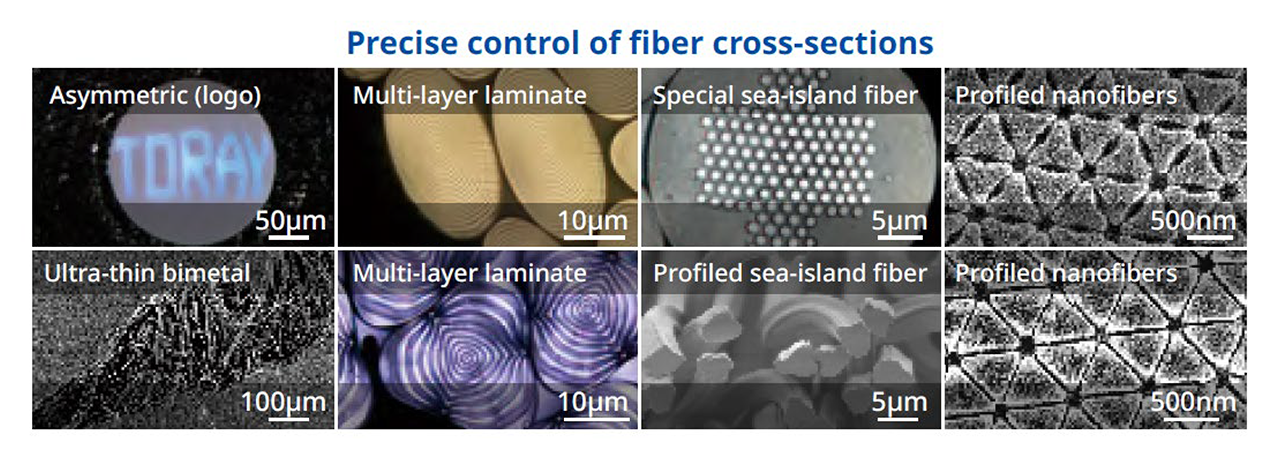
Our proprietary conjugate spinning technology, NANODESIGN™, precisely shapes a variety of fiber cross-sections at the nanoscale, enabling conjugate spinning using multiple types of raw materials that were previously difficult to conjugate. By way of synergies between precisely controlled fiber cross-sections and raw material attributes, we have been able to continuously realize high-performance comfortable fibers & textiles that exhibit various functions, along with aesthetics and wearing comfort that were difficult to achieve with conventional technology, thereby contributing to people’s safe, secure, and fulfilling lives.
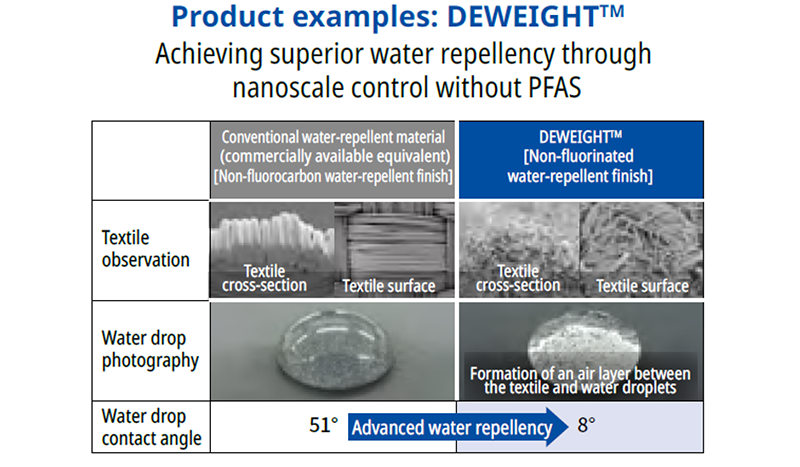
Our water-repellent stretch textile DEWEIGHT™ forms a structure similar to that of natural materials with excellent water repellency by using our NANODESIGN™ new raw yarn, which precisely controls the fiber cross-section, and a special advanced processing technology that creates a spiral structure on the fiber surface, thereby achieving outstanding water repellency and a comfortable, smooth feel without perand poly-fluoroalkyl substances (PFAS).
In recognition of this technology’s future growth potential and social significance, we won the 2022 Chemical Society of Japan Award for Technical Development, and then in 2024, we received the Main Prize of the 2024 Ichimura Prize in Industry from Ichimura Foundation for New Technology.![]()
![]()
![]()
-
Long-Lasting Reverse Osmosis Membranes with High Permeability, High Removal Efficiency, and Chemical Resistance
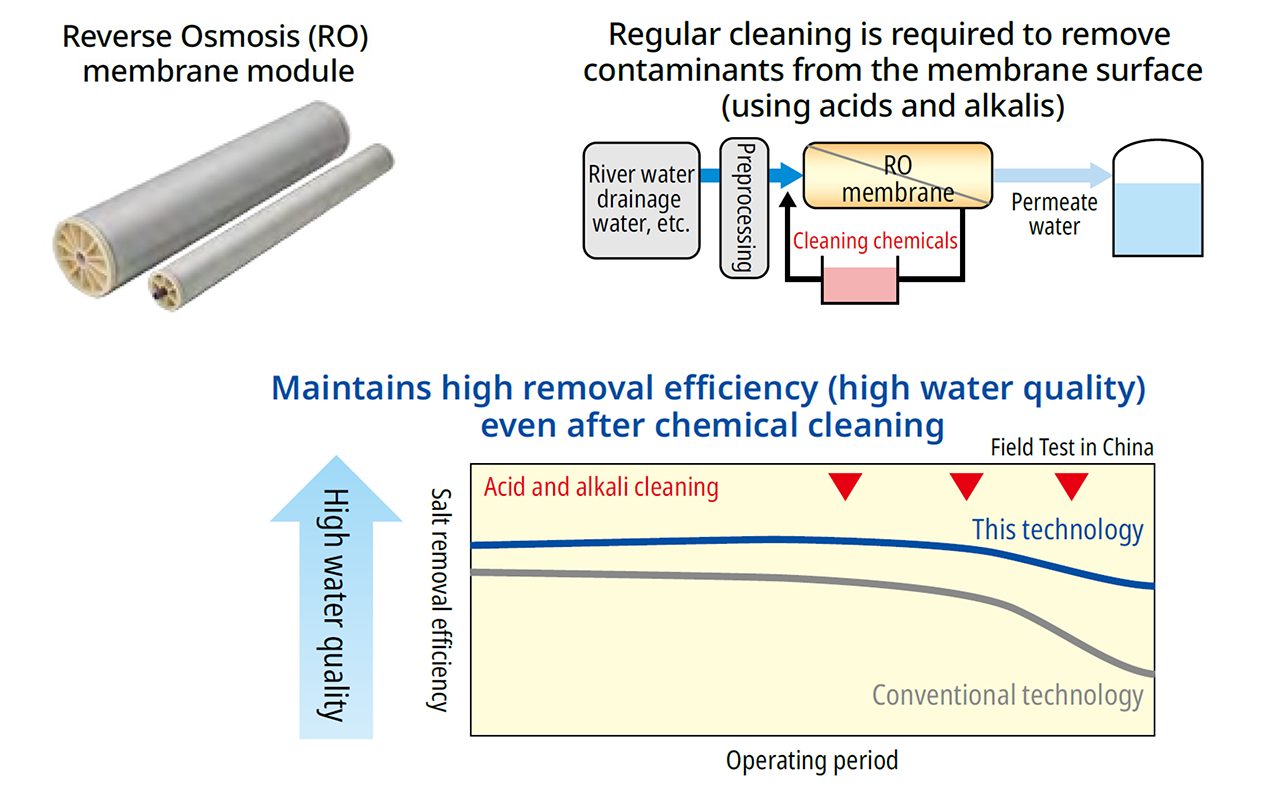
We identified that low durability against cleaning chemicals (acids and alkalis) that remove dirt adhered to the surface of reverse osmosis (RO) membrane leads to structural degradation and a decline in water quality. To address this issue, we found that (1) improving structural stability against acids and alkalis and (2) controlling the pore size for selective water permeability are both necessary. To achieve these goals, we have worked on the precise control of the membrane formation process. As a result, we have achieved the practical application of RO membrane that balances high permeability, high removal efficiency, and chemical resistance. Since the RO membrane can maintain high water quality even after chemical cleaning, the components also do not need to be replaced so frequently. The RO membrane utilizing this technology is used in over 100 countries worldwide for the production of industrial water, agricultural water, and drinking water, contributing to the provision of safe and reliable water to address water scarcities faced by the international community. The invention of this RO membrane was highly evaluated and received the WIPO* Award at the 2024 National Commendation for Invention by the Japan Institute of Invention and Innovation.
- World Intellectual Property Organization
![]()
Strength 3Marketing
Strength: Sharing Visions with Customers while Creating Markets
In addition to commercializing innovative materials, Toray recognizes the critical need to put forward proposals that dramatically increase the value of customers’ products. With this in mind, Toray Group moves beyond the simple supply of materials, and works diligently to advance solutions that address customers’ issues on the back of commonly shared visions.
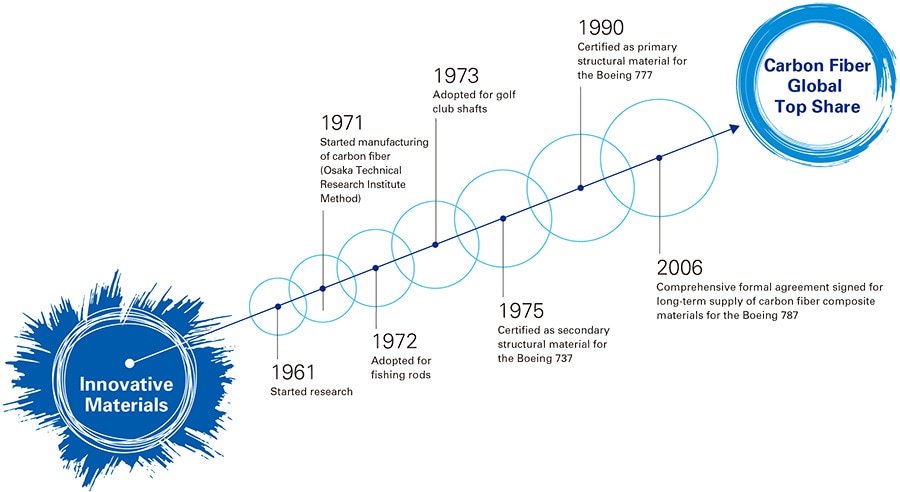
Toray began the full-fledged production of commercial carbon fiber in 1971. Given the absence of carbon fiber market when we started, it was imperative that we take steps to create the market from scratch, while developing processing and molding methods, either on our own or in collaboration with customers. At the outset, we focused on the sporting and leisure fields, where a certain level of demand could be expected if the performance of products was high even when materials were a little expensive. As a result, we were successful in creating the market in the fields of fishing rods, golf clubs, and tennis rackets.
In contrast aircrafts, an area Toray Group targeted for carbon fiber sales in the long run, was hit by the first oil crisis in 1973. This set off the ongoing search for lighter weight, energy efficient materials by aircraft manufacturers, demand for carbon fiber reinforced plastic (CFRP) gradually increased for the use in the secondary structures of aircrafts, such as rudders. Based on the track record, The Boeing Company adopted plans to apply CFRP as a primary structural material (for structural parts where damage is directly linked to a crash) in its Boeing 777 in 1980, and requested global manufacturers to step up their development of high-performance carbon fibers as well as CFRP. Against the backdrop of an increasingly competitive environment in the development of new technologies by each company, our product was certified as the world’s first and only product which cleared the specification requirements put forward by The Boeing Company in 1990.
Our product has been recognized for its reliability as a material used in the manufacture of aircrafts, as well as for its stable supply and cost performance. Through a process of interactive technology exchange, Toray and The Boeing Company have continued to engage in the development of next-generation aircrafts, while nurturing strong ties of mutual trust. In 2003, both companies commenced the joint development of a CFRP for use in the next-generation medium-sized passenger aircraft the Boeing 787. After executing a fundamental agreement for the supply of materials in 2004, the companies concluded a long-term 16-year comprehensive supply contract in 2006. Spurred by the hope that carbon fiber would be adopted as a core material in the manufacture of all aircrafts, Toray has continued to engage in development. In a major step toward crystalizing visions of Toray Group and The Boeing Company, the Boeing 787, for the first time in the world, entered service across domestic flights in Japan in 2011. Over the ensuing period, the Boeing 787 operations have been expanded to service routes around the world.
Indicative of the widespread growth of the carbon fiber market, and our strong belief that materials have the power to bring about fundamental transformations in society, we are sharing visions with customers while providing broad solutions that help realize those visions as our inherent strength. As a result of these endeavors, we are expanding manufacturing markets in which materials play a leading role.
- Column
-
Development of World’s Highest Strength Carbon Fiber TORAYCA™ T1200
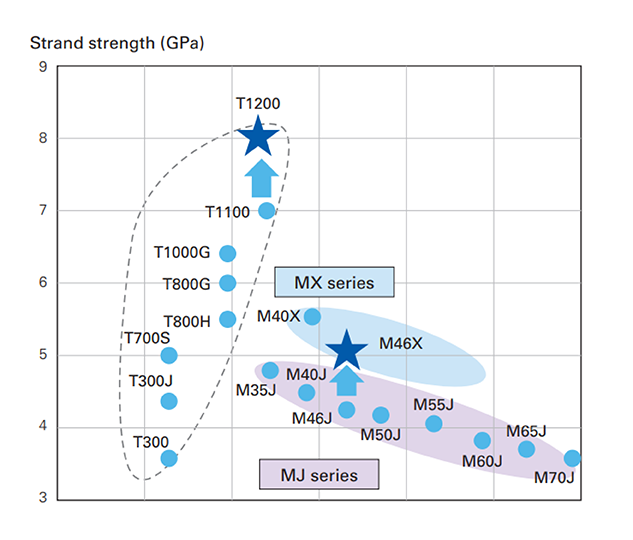
Since Toray began selling carbon fibers in 1971, we have been supplying high-performance TORAYCA™ carbon fiber for applications such as pressure vessels (CNG and CHG tanks), automobiles, aircrafts, and sporting equipment. In 1986, we developed TORAYCA™ T1000, which was then the world’s highest strength carbon fiber, and have since remained a global leader in that respect.
In November 2023, we announced the development of TORAYCA™ T1200, which has a tensile strength of 8.0 GPa, setting a new mark for the highest strength. By further refining our proprietary nanoscale structural control technology, we have designed and achieved an internal structure with high toughness. In January 2024, we also announced the development TORAYCA™ M46X, the latest offering in the TORAYCA™ MX series which features a high tensile modulus. TORAYCA™ M46X maintains the same high tensile modulus as conventional products and has an increased strength by approximately 20%. In this way, we will increase our contribution to the realization of a carbon-neutral society, and expand into higher-end fields, such as the aerospace, industrial, and sports applications.![]()
Strength 4Supply Chain Management
Strength: Building a Supply Chain Unrivaled in the World with Our Powerful Partners
Since the dawn of the synthetic fibers market shortly after the end of the Second World War, Toray Group has not only supplied materials to primary users such as spinning companies and fiber merchants, but has also focused its energies on promoting the use of new material brands, including “Nylon” and “Tetoron” throughout the supply chain, from wholesalers to distributors. As the market for ready-made garments from brand-name apparel manufacturers increased in the 1960s–1970s, Toray organized its domestic production team, largely in Hokuriku manufacturing region, for the weaving, spinning, dyeing, fiber processing, and knitting segments, contributing to the establishment of an integrated fiber and textile business model. The Group moved to accelerate global operations in the 1980s and 1990s, advancing the establishment of an integrated production system that covered everything from fiber to dyeing, in Southeast Asia and China.
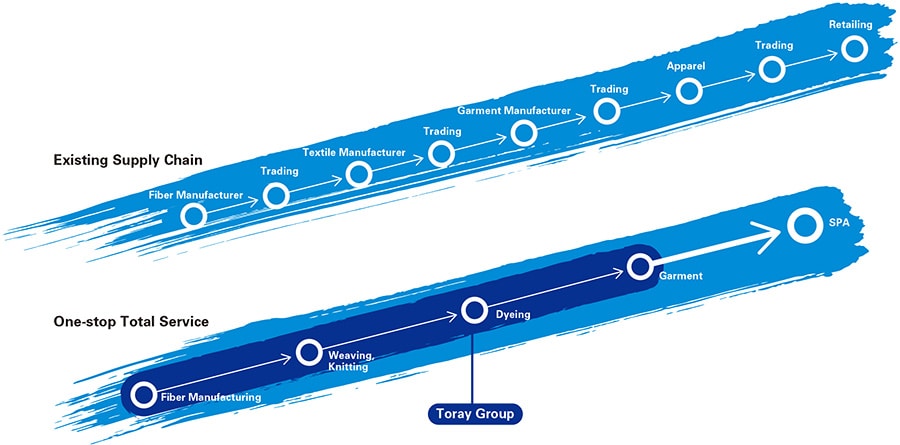
The turn of the century saw strong growth in SPA (specialty store retailer of private label apparel) and fast fashion businesses. The SPA business model is very different from the traditional product-out business model, in which production is maintained at a constant level at each stage. In the SPA business model, production immediately reflects consumer behavior based on data collected at the store, bypassing interim distributors and allowing companies to completely sell out products while avoiding both excess inventories and lost sales opportunities. Toray Group had the production technology capable of mass producing high-quality products, as well as a strategy for the global textile business that was well suited to the SPA mechanism. The Group also had a robust R&D system for the development of new and unique products.
The Company in 2006 agreed to a strategic partnership with UNIQLO CO., LTD. and thereafter reformed the distribution system for fibers & textiles. The two companies moved to bridge the boundaries between a material manufacturer and a specialty store retailer of private label apparel (SPA), establishing an unprecedented business model in the world in which the two operated together as a virtual company that handled planning, development, production, and distribution for everything from raw materials to finished products. This contributed to the establishment of a global supply system, with production bases being located not only in China, but also in the ASEAN countries and Bangladesh. The Company has since continued to expand its integrated fibers, textiles, and garments business. Toray remains focused on building and operating a global supply chain network that can organically tie together a variety of processing stages and quickly deliver products with identical levels of quality thanks to the optimally located, efficient, and cost competitive production bases. Toray’s building of a supply chain system unparalleled in the world contributed to the radical transformation of distribution systems in Japan, and appealing Japanese technology to the world, which has added new value to the textile industry.
- Column
-
Dramatic Reform of Distribution Systems for Textile Industry
The strategic partnership agreement between Toray and UNIQLO CO., LTD. in 2006 represented the realization of a vertically linked structure based on the “total industry” concept, which integrates planning, development, production, and distribution of everything from materials to final goods. This system allowed the rapid resolution of the problems associated with distribution system inefficiencies in the Japanese textile industry. Distribution systems up to that point had been characterized by multiple levels, in which product flow was different according to material, application, or item. This contributed to a longer supply chain, difficulties in determining consumption at the retail level, uncertainties and speculation at each stage leading to distributor inventory build-ups, increased losses, and thus leading to an impairment of global competitiveness of the industry. The collaboration with UNIQLO CO., LTD. contributed to Toray Group’s textile business consolidating its multi-level supply chain into a simple and flexible production system better linked to actual demand trend. The Group aims for the business to achieve sustainability through the sharp reduction of inventory risk as well as production and distribution costs on a global basis.
Strength 5Global Production System
Strength: Organic Collaboration Among Production Bases
Guided by our basic policy of global management that emphasizes the need to take root over a long period in order to contribute to the economic development of the countries and regions where we operate our businesses, Toray Group’s overseas production activities began with the establishment of a subsidiary in Thailand to provide integrated spinning, weaving, and dyeing of polyester-rayon fabric in 1963. As a Japanese company, Toray engaged in local production from an extremely early period. Beginning with Southeast Asia during the 1960s and 1970s, the Company’s global network expanded to Europe and the U.S. in the 1980s, and then to the Republic of Korea and China in the 1990s. The Group has established production bases for such items as films and carbon fiber, in addition to fibers and textiles. Today, every effort is being made to promote organic collaboration among Group bases in Japan and overseas. Through these means, Toray is building an optimal global production and supply structure that adapts flexibly to changes in the business environment in line with market, foreign currency, and other trends. Furthermore, successful steps are being taken to create a production system that can supply high-quality products on a stable and continuous basis in any region.
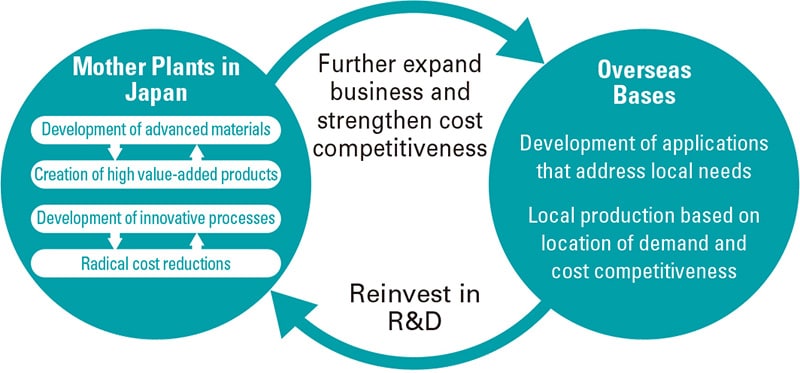
As of the end of FY 2025, Toray Group has 195 affiliate companies overseas, and overseas sales amounted to about 1,540 billion yen, accounting for approximately 60% of the Group’s total revenue. Drawing on its global production system as a source of considerable strength, Toray Group is implementing a sustainable growth cycle. In specific terms, we are undertaking cutting-edge innovative research and development at our mother plant in Japan, while at the same time adopting a strategy to establish local production systems swiftly and flexibly from the perspectives of demand and cost competitiveness. Complementing these endeavors, we are also promoting the development of applications that cater to local needs at each production base. This in turn enables us to capture new profit opportunities.
- Column
-
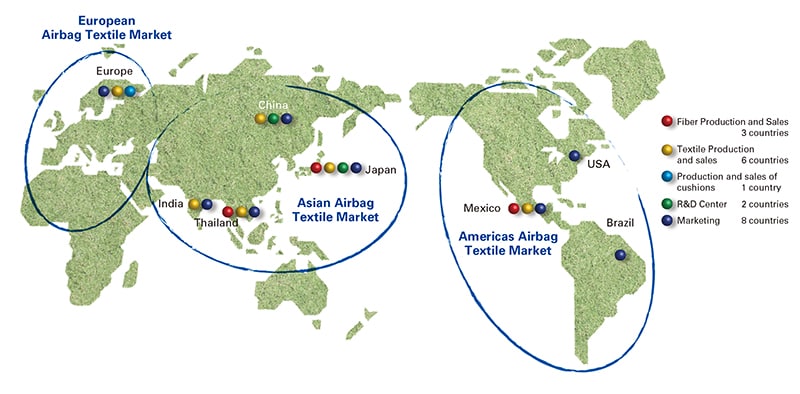
Working to Secure the Leading Position in Airbag Textile through a Global Integrated Production System
The airbag market is exhibiting rapid growth due to upswings in the number of automobiles sold in emerging countries as well as installation rates. In its airbag fibers & textiles business, Toray Group began the integrated production of a wide range of products from fibers to textiles in Mexico from 2018 as a part of efforts to further reinforce its global production system. Currently, Group companies manufacture airbag fibers in three locations and airbag textiles in six locations worldwide, respectively, under the global production system that is capable of providing airbag textiles of a uniform quality in a timely manner across the Group’s entire network. As a result of these efforts, Toray Group is highly praised from a business continuity plan (BCP) perspective. Going forward, we are aiming to secure the top market share in the global airbag textiles market where strict quality control and reliability of products are required.
![]()